


THE SECOND ENDING
- Rick Roseman

- 3 days ago
- 8 min read
By: Thomas Chatfield
SEO: Camber Aviation Management


In this 'eye-opening' piece, Thomas Chatfield reminds us that there are in fact, 'two' endings to every completion contract. Naturally, there's the one we're all familiar with – "Fly Away Day". The cold-soaks have been done, rigorous inspections and squawks carefully addressed. The aircraft is perfect, inside and out. The sun is shining, the completion crews and execs are all gathered for the fanfare. The aircraft's APU is whining. It's fueled and ready to depart with its proud owners. It's a jubilant moment to say the very least.
But as Mr. Chatfield accurately points out – there is a second ending to every completion contract – one that is rarely acknowledged. The second ending is the day you stop noticing the aircraft and simply make yourself at home in it. And it’s completely unexpected. It’s a significant milestone for an owner but few people in the industry plan for it.
Which is a shame because the second “ending” can’t take place until something else has been dealt with. Whether it happens during the first flight; or after a month or two of flights, at some point, maybe over the first cup of coffee, there comes a moment when you notice… the thing.
By the time your completed aircraft is delivered, you’ve spent years inside the decisions that made it. And some of those decisions might seem, initially, almost unrelated to aviation. What car do you drive? How have you decorated your house? Where do you go when you can finally stop working? How do you like to relax? We ask because a cabin is formed around a person, not just a specification. And when that translation goes well, the result is one of the more unusual objects in the world: a machine that is also a portrait. Millions of dollars of cutting-edge aerospace engineering that is, in every way that matters, only yours.
And then it’s finished, ready on the tarmac, waiting for its first flight.
I’ve watched many people experience this and it never happens the same way twice. Some keep it small: a walk-through, a shakedown flight, a warm handshake and a sincere thank you. One client bounced through his cabin like a five-year-old in a chocolate factory, which, to this day, remains my favourite way to see it happen. Most land somewhere in between: standing in the entryway of the biggest purchase of their lives, unsure how excited they’re allowed to be. Some celebrate with champagne, others just take photographs, but everyone is smiling because this is the finish line after years of work and anticipation and it earns every bit of ceremony it gets.
That’s the first ending – it’s a genuine milestone and it deserves all the photographs.
But it doesn’t finish there. Because like I mentioned, every completion programme ends twice, and the second ending looks nothing like the first. Nor does it happen on the tarmac. It happens, months later, maybe somewhere over an ocean or climbing to altitude with a continent beneath you.
The second ending is the day you stop noticing the aircraft and simply make yourself at home in it. And it’s completely unexpected. It’s a significant milestone for an owner but few people in this industry plan for it.
Which is a shame because the second “ending” can’t take place until something else has been dealt with. Whether it happens during the first flight, or after a month or two of flights, at some point, maybe over the first cup of coffee, there comes a moment when you notice… the thing. It’s never a big thing, which is, actually, part of the problem. It could be a reading light that doesn’t quite do what you thought it would, or a side-ledge table that stows with some reluctance. Maybe it’s a monument hinge that’s started to rattle at take-off. These are small things that generally aren’t anyone’s fault, but you’ll probably know the same feeling from a new suit or jacket. For example, the small, discreet tag you didn’t notice in the shop but, when you actually wear the jacket, it finds the one spot on the back of your neck and stays there. It doesn’t ruin the jacket, but it takes the edge off, just a little, every single time you feel it.
Except this jacket cost millions of dollars, and you’re wearing it at 41,000 feet.
Unfortunately, your senses are primed to find the thing and home in on it. Take a clean sheet of paper and put a small dot on it, then ask anyone what they see. Nobody sees a clean piece of paper: they see the dot. That’s how we’re wired, and the instinct doesn’t switch off when a new owner boards a completed cabin. After all, you’ve spent years getting every detail right, so the one thing that’s off kilter registers as a type of betrayal – and it will sit in your eyeline on every flight until somebody deals with it.

Some of these things were never flaws at all, they’re preferences that only surface in actual ownership. On one programme we placed the principal’s seat where tradition puts it, second seat on the right, cabin controls falling naturally to the right hand. The client was left-handed. He’d have loved the controls on the left, and we could have done it easily. We just never thought to ask, and he never thought to mention it. We’d had many in depth conversations about every detail of the jet – except which hand he reached with. No rendering or walkthrough was ever going to catch that, only ownership.
Sometimes the “thing” is genuinely new.
Engineers have a slightly morbid name for these issues: infant mortality. It refers to the small percentage of components that were going to fail early and often choose their moment once the aircraft is flying. A reading light burns out and leaves an uneven dark spot that draws your eye in the otherwise beautiful lighting system. The oven (and it so often is the oven, because galley ovens have never met a reliability statistic they couldn’t disappoint) fails on the evening you’re entertaining, and it doesn’t matter how beautiful the steak looks on the plate if it’s cold. None of this means the completion failed – it just means the aircraft is new. But knowing that intellectually and feeling it at altitude are different things.
And there’s another category of “thing” where much of what surfaces in those first hundred hours isn’t broken or flawed – it’s just unfamiliar. Cabin management systems have become genuinely powerful and about as intuitive as the first iPhone (by which I mean not very; it took Apple four generations to make that device feel obvious). So the call volume in the first hundred hours is dominated by the same three things: the Wi-Fi, the lighting and the satellite communications; and much of the time it’s due to the unfamiliar complexity of the systems. The knowledge of how it all works lives in whoever was trained to use it, usually the flight attendant. But if that person moves on, the knowledge walks out the door with them and, on the very next flight, the satcom mysteriously stops working.
It’s the same principle as breaking in a car. You wouldn’t collect a brand-new car from the dealership and immediately start out on a coast-to-coast road trip – and an aircraft is no different. Ideally, you’ll fly it domestically a few times first, shake it down and let the crew get a feel for it.
So the first hundred hours will have their character regardless. The difference between a good entry into service and a miserable one was never the number of “things”. It’s whether anyone owns them – which is, unfortunately, where most industry paperwork goes silent.
The first ending has a name: “flyaway” because it’s in the contract – but nearly every completion contract closes there. The completion centre’s scope ends, the design team’s scope ends, the champagne is drunk, the photographs are posted, and everyone who worked on the aircraft goes back to start on the next programme. Your actual experience of owning it starts the following morning in a phase that officially belongs to nobody.
To be clear – there is a warranty (usually a year or two on the interior) and the process works. Your crew or your engineer contacts the completion centre, the item gets documented and a fix is planned. One question that determines everything is whether the part is standard or unique. A water-filter cartridge is standard: a phone call and a courier. A cracked stone sink is not a part, it’s a commission, built once for one aircraft, and the replacement can take six months because it has to be remade before it can be installed.
But operating the warranty is the owner’s problem, which is where many programmes are lacking. The fixes arrive in drips: a day here, a day there, spread across a year. Or, because arranging downtime is a nightmare in its own right, and the niggles are, after all, only little things… well, the owner might decide to put up with them for the sake of efficiency.

Which is the moment the second ending just disappears into the ether – because the dot doesn’t just go away on its own. It’s there on the first flight and the fiftieth: a stitch line that’s opened or a table that doesn’t sit right. It’s small but sits right in your eyeline, daring you to do something about it, knowing that it’ll be a huge inconvenience. You’ll keep thinking “I should get that looked at” but months pass, and the thought becomes a kind of low background hum on every journey. The cabin no longer belongs entirely to you, part of it belongs to the dot.
The owners who plan for the second ending can take a different path. After flyaway, someone on the programme can still have ownership of the first hundred hours. Someone will capture every squawk and tell the owner they’re already on it. They can bundle the work into one planned downtime rather than a year of odd days. Someone can train the crew on the aircraft before delivery, set up the owner’s phone calmly days before the first flight, and answer the call five months later when a part-time flight attendant can’t get the Wi-Fi to behave.We completed an aircraft that was delivered in the spring, and I’m still on the entry-into-service calls now, months later. That’s the programme operating as expected.
The best entry into service I’ve seen was a brand-new Global 8000: zero commitment-letter items at delivery, on time, domestic flights first and then international, and not a single AOG. The owner still called twice in the early weeks: a Wi-Fi question and a new part-time flight attendant who needed walking through the systems. Both were solved in minutes over the phone to everyone’s satisfaction. The questions are part of learning about a new jet, but what makes the difference is the presence of someone who can answer them.
And then, one day it happens.
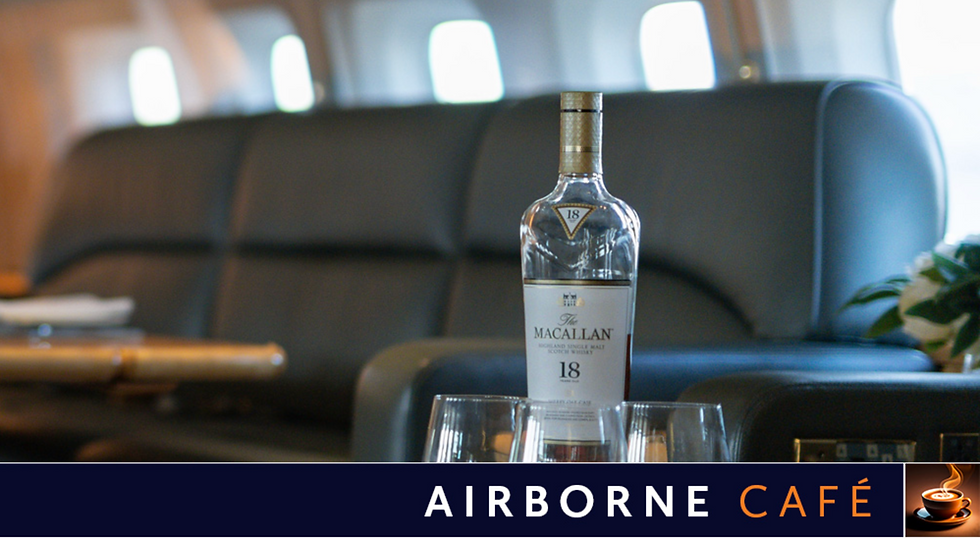
You’re a few flights in, the crew now knows the aircraft, and it knows them. You’ve settled into your seat somewhere over the Atlantic, the flight attendant has just handed you a glass of something you particularly like, and you kick back and sigh with contentment. And, somewhere between the second sip and the horizon, you realise you haven’t noticed a single thing. No itchy tag, no dot that mars the whole page… The cabin just feels like yours, the way a house feels like home sometime after you’ve stopped unpacking.
That’s the second ending. It’s not eventful or thrilling, but it is, nonetheless, significant and sometimes I’m fortunate enough to hear it happen. An owner picks up the phone mid-flight, on the connectivity they now rely on, just to say so. I’ve had a few of those calls, and they’re part of the reason I do this.
This doesn’t take anything away from the first ending, which is momentous – and a milestone worth celebrating. But the second ending is the one that’s worth planning for because it’s the one you actually bought.


Comments