


The Architecture of Ambition: Masters of Megayacht Design
- Rick Roseman

- Jul 12
- 3 min read

When the world's most discerning owners commission a vessel, they reach for the same short list of studios. Here's why these names define the pinnacle of the art.
There is a moment in the life of a megayacht that has nothing to do with sea trials or delivery ceremonies. It is the moment an owner steps aboard and feels, instinctively, that the vessel is theirs — an extension of their sensibility, their history, the private language of how they live. Manufacturing that feeling, reliably and at extraordinary scale, is the defining challenge of superyacht design. It is why a small constellation of studios and shipyards commands the most significant commissions afloat, and why owners return to them, project after project, decade after decade.
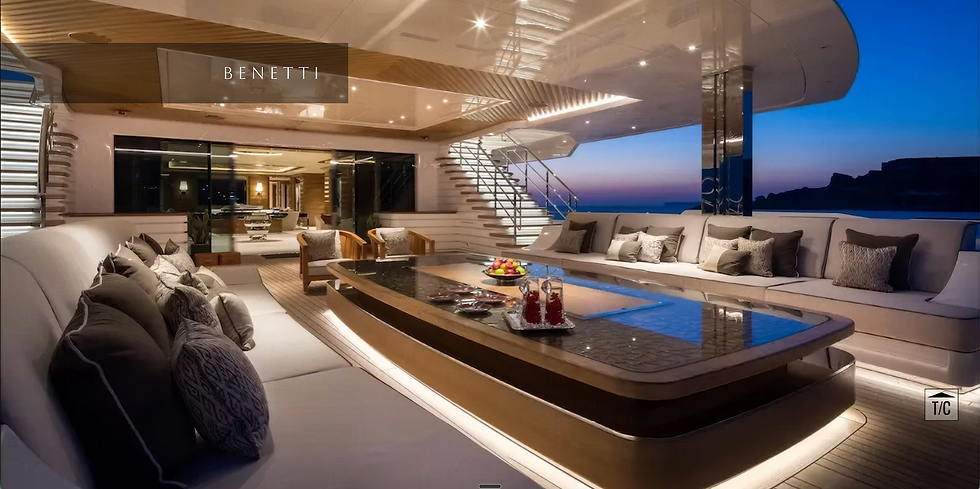
Benetti, the storied Italian shipyard, is in many respects the institution that made the modern megayacht possible. Founded in Viareggio in 1873, Benetti launched the concept of the motopanfilo and helped invent what we now recognize as the modern megayacht. The Azimut|Benetti Group operates the world's largest active shipyard in Livorno, covering 240,000 square metres, with offices across Fort Lauderdale, Dubai, Hong Kong, Singapore, and London. Benetti's design language — warm, assured, rooted in the Italian tradition of bella figura — remains the standard against which Italian luxury at sea is judged. The yard's pioneering Oasis Deck concept, a lowered rear section whose wings fold down to create an extended beach club zone, eroded the traditional strict division between interior and exterior and influenced the entire industry's approach to how water, hull, and living space intersect.

OCEANCO operates at a different register — not as a design studio per se, but as the Dutch shipyard against which all others are measured when a client demands the genuinely extraordinary. Based in Alblasserdam in the Netherlands, Oceanco builds luxury yachts from 80 to 140 metres in steel and aluminium, approaching each build with an open mind and frequently pushing the boundaries of what onboard technology can achieve. The yard's collaborative model — inviting world-class exterior stylists and interior designers into each project — has produced some of the most recognizable profiles afloat, from the sailing yacht Black Pearl to the colossal KAOS. Oceanco has worked with designers including Terence Disdale, Nuvolari-Lenard, Espen Øino, and Andrew Winch — partnerships that ensure its hulls carry not just engineering excellence but genuine aesthetic authority. The yard's recent NXT programme further signals its commitment to bringing progressive design thinking, including sustainability-forward propulsion systems, into vessels of the highest ambition.
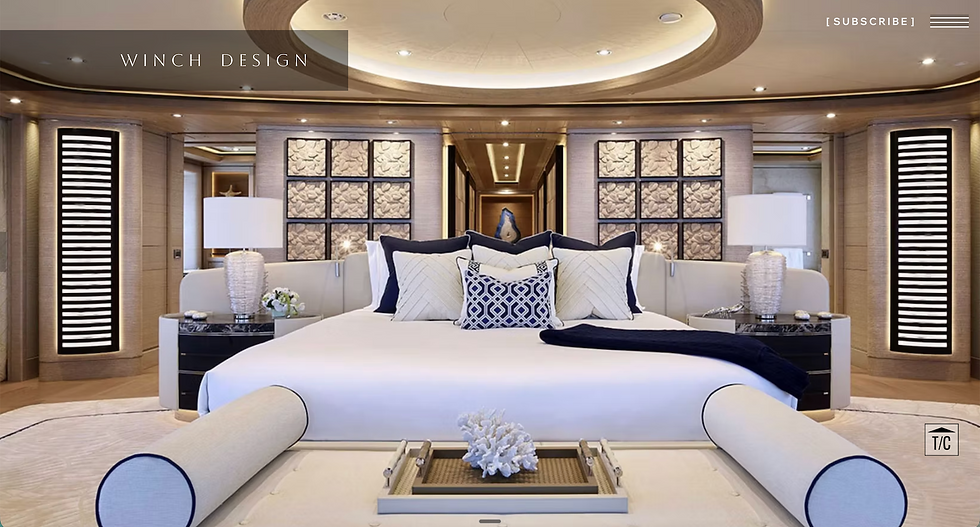
Winch Design, headquartered in London, is the studio owners reach for when they want a yacht that feels as cohesive as a great building — where the exterior silhouette, the deck arrangement, and the intimacy of a private stateroom are conceived as a single, sustained idea. Synonymous with visionary creativity and holistic craftsmanship, Winch's portfolio includes the 133-metre Al Mirqab and the Art Deco-inspired Phoenix 2 — icons where sophistication and innovation are inseparable. The studio has also partnered with Oceanco to create concept Reverie and with Feadship on Fusion, demonstrating a rare ability to work at the frontier of what yards and technology can deliver. Andrew Winch and his team understand, perhaps better than anyone, that scale is not the enemy of warmth — that a 90-metre vessel can still feel like a home.
Luttenberger Designs operates with a precision and discretion that suits the most private tier of ownership. The studio's approach is resolutely bespoke: each project begins not with a signature aesthetic but with an interrogation of how a specific owner moves through the world. Luttenberger was selected alongside Winch and Tillberg to create interior design concepts for the 222-metre Somnio, placing the studio in rare company on a project where only the most trusted names were invited. That selection speaks to a reputation built quietly but solidly over years of work for clients who rarely seek publicity.

Studio Indigooccupies a position that is simultaneously rare and quietly influential. Founded in London in 2005 by Mike Fisher — himself a superyacht owner, which is no small thing — the studio approaches each project as an act of habitation first, spectacle second. Studio Indigo's philosophy holds that clients' wishes come first, not the designers' ambitions, and that every project should feel like a unique journey. That ethos has produced a portfolio of uncommon range: from the 70-metre Joy, winner of the World Superyacht Awards in 2017, to the 90-metre Icebreaker, whose interiors evoke a floating loft capable of reaching the most remote corners of the earth. Motor Yacht M, a 47-metre Sanlorenzo explorer designed around adventurous owners, won a World Superyacht Award in 2025 — further evidence that Studio Indigo's gift for bespoke spatial storytelling translates effortlessly across scale.


Comments